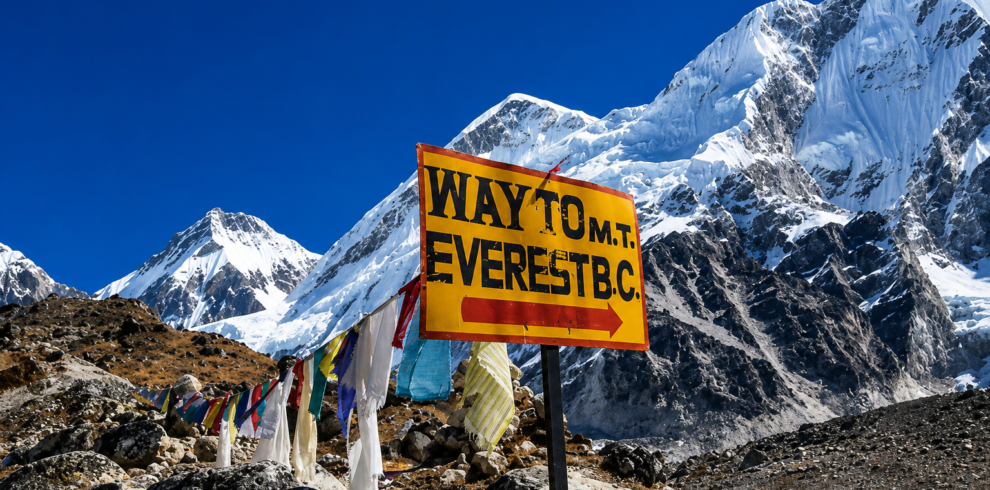
Jiri to Everest Base Camp Trek is the classic and historic trekking route that follows the legendary path taken by Sir Edmund Hillary and Tenzing Norgay Sherpa during their first successful Mt. Everest Expedition in 1953. Known as the original Everest trail, this route offers a perfect blend of natural beauty, cultural richness, and adventure.
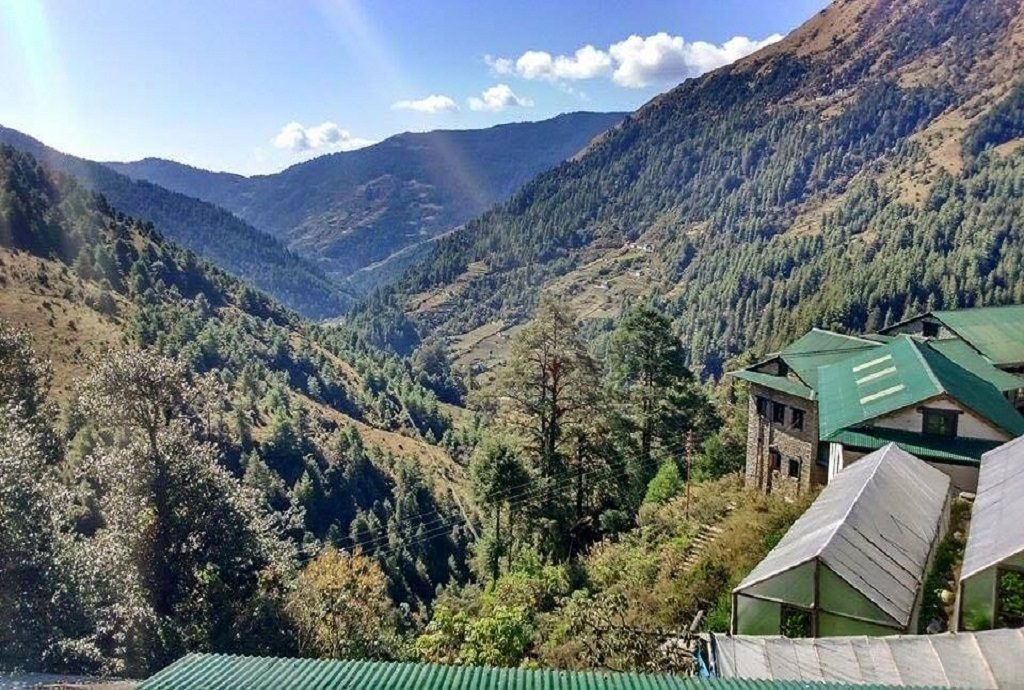
Starting from Jiri, this trek takes you through picturesque villages, lush green forests, terraced farmlands, and vibrant Sherpa settlements before reaching the heart of the Khumbu region. It provides an excellent opportunity to experience the authentic lifestyle of the Himalayan people while gradually acclimatizing to higher altitudes.
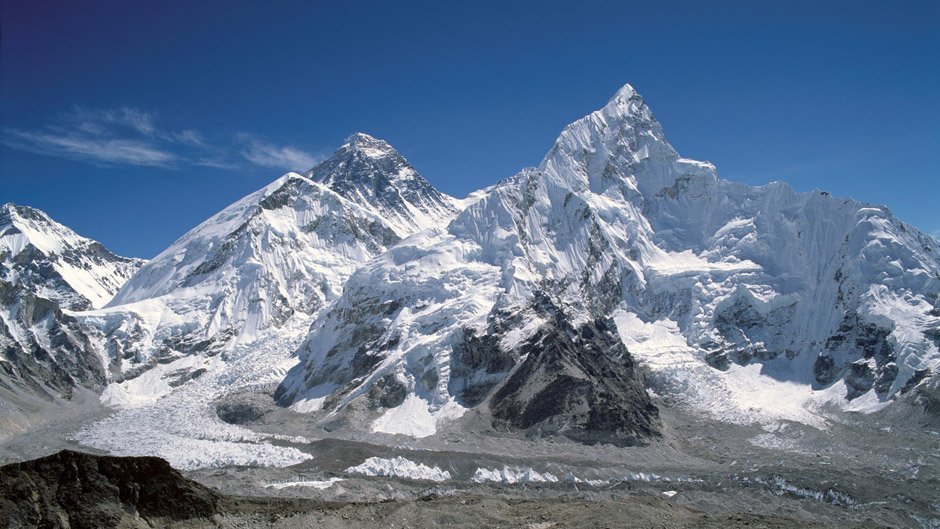
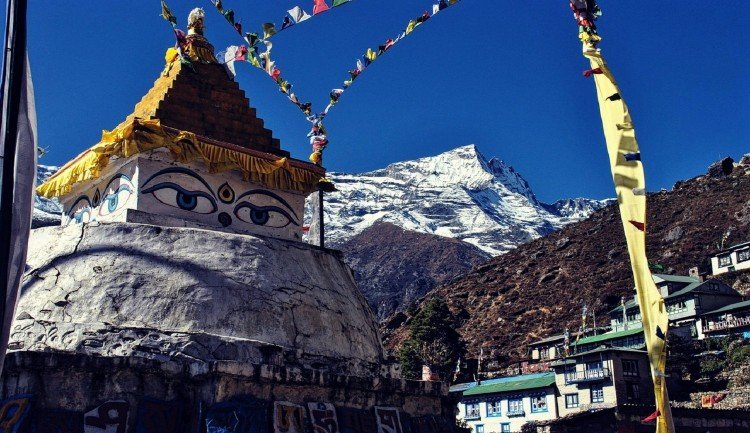
Throughout the journey, trekkers are rewarded with breathtaking views of the world’s tallest peaks, including Mount Everest (8,848.86m), Lhotse, Ama Dablam, Thamserku, and Makalu. The trail also passes through the scenic Sagarmatha National Park, home to rare wildlife, diverse flora and fauna, and centuries-old Buddhist monasteries.
The Jiri Everest Base Camp Trek is ideal for those seeking a less crowded and more immersive trekking experience filled with both natural splendor and deep cultural encounters in the Himalayas.
Trip Info
-
Hotel/Tea houses.
-
Autumn - Spring
-
5545m
-
Fly/Car/Jeep/ Bus
-
5/6 hours
Overview
This trek is known to be physically demanding, featuring numerous steep ascents and descents that test endurance and strength. Also referred to as part of the Great Himalaya Cultural Trail, it offers much more than just natural beauty — it’s a journey into the rich Buddhist heritage of the Everest region, where Lamas serve as spiritual leaders guiding the local Sherpa communities.
Along the trail, trekkers can enjoy a vibrant mix of birdlife, dense forests, and charming traditional villages, each offering stunning photo opportunities and warm local hospitality. The route passes through several renowned Buddhist monasteries, including the sacred Thupten Choling Monastery near the Sherpa village of Junbesi (2,700m) and the serene Trakshindu Monastery, both of which provide deep insights into Himalayan spirituality and monastic life.
The Jiri to Everest Base Camp Trek is not only a journey through breathtaking mountain landscapes but also a spiritual and cultural adventure that connects trekkers to the heart and soul of the Himalayas.
Trip Highlights
- Visit several UNESCO World Heritage Sites in the Kathmandu Valley, such as Pashupatinath Temple, Boudhanath, Swambhunath (The Monkey Temple), and others.
- Jiri to Everest Base Camp Treks follows the original route through the SoluKhumbu region used by the early explorers to Everest.
- Oyu (8,201m), including the highest mountain peak on the earth, Mount Everest (8,848m).
- Follow trails through dense Rhododendron and pine forests (spring is idyllic with rhododendron’s in pink bloom).
- Experience the best of the peaceful and off-the-beaten-path Everest Base Camp (EBC), a true haven for excitement seekers.
- Climb the scenically rich Kala Patthar, a 5,000m above-sea-level vantage point with an unmatchable sunrise view.
- Experience the world’s highest luxury hotel, the Everest View Hotel.
- Traverse the classic Everest Trekking route taken by mountaineering pioneers through the forests of juniper, rhododendron, and a wide variety of other flora.
- Reach the base of the earth’s highest point, Mount Everest.
Itinerary
Upon your arrival at Tribhuvan International Airport, our representative will warmly welcome you and assist with your transfer to the hotel in Kathmandu. After check-in, you can relax and recover from your journey or explore the bustling streets of Thamel, the city’s main tourist hub filled with cafes, shops, and local culture.
In the evening, there will be a briefing about the Jiri to Everest Base Camp Trek, where you’ll meet your guide and discuss important details about the adventure ahead.
Overnight stay at a hotel in Kathmandu.
Today is dedicated to exploring Kathmandu Valley and preparing for your upcoming trek. After breakfast, you’ll embark on a guided sightseeing tour of some of the city’s UNESCO World Heritage Sites, including Pashupatinath Temple, Boudhanath Stupa, and Swayambhunath (Monkey Temple) — each offering deep cultural and spiritual insights into Nepal’s rich heritage.
In the afternoon, you’ll return to your hotel to prepare trekking gear, review your itinerary, and attend a pre-trek briefing with your guide to ensure you’re fully ready for the journey ahead.
Overnight stay at a hotel in Kathmandu.
After an early breakfast, you’ll start your scenic drive from Kathmandu to Bhandar via Jiri, the traditional gateway to the Everest region. The journey takes around 8–9 hours, passing through beautiful landscapes, terraced hills, dense forests, and charming rural villages that showcase Nepal’s countryside life.
Along the way, you’ll stop at Jiri, a historic town known as the starting point of the classic Everest Base Camp route used by early expedition teams. Continuing onward, the road winds through green hills and mountain views before reaching Bhandar, a peaceful Sherpa village surrounded by nature.
Overnight stay at a local teahouse in Bhandar.
After breakfast, begin your first day of trekking from Bhandar towards Sete. The trail starts with a descend through terraced fields and small villages, followed by a steady climb through forests of oak and rhododendron. Along the way, you’ll enjoy the tranquil beauty of rural Nepal, crossing several streams and passing traditional Tamang and Sherpa settlements.
You’ll stop at Kenja (1,640m) for lunch before beginning the steep uphill climb to Sete, a charming mountain village nestled on a ridge surrounded by lush greenery. The day’s trek is both scenic and rewarding, offering glimpses of Himalayan life and culture.
Overnight stay at a local teahouse in Sete.
Today’s trek is one of the most scenic and rewarding sections of the Jiri to Everest Base Camp trail. The day begins with a gradual climb through dense rhododendron, magnolia, and pine forests, eventually leading to the Lamjura Pass (3,530m) — the highest point between Jiri and Namche Bazaar.
From the top of the pass, enjoy panoramic views of snow-capped peaks and lush valleys. After crossing the pass, the trail descends through fragrant pine forests and charming villages before reaching Junbesi (2,670m), a picturesque Sherpa village known for its beautiful monastery and warm hospitality.
Overnight stay at a local teahouse in Junbesi.
After breakfast, you’ll leave the peaceful village of Junbesi and continue your trek toward Nunthala. The trail begins with a gentle descent to the Junbesi Khola (river), followed by a gradual climb to Phurtyang, offering the first distant view of Mount Everest on a clear day.
The route passes through traditional Sherpa and Rai villages, terraced fields, and dense forests filled with pine and rhododendron. You’ll also cross the Taksindu La Pass (3,071m), marked by colorful prayer flags and stunning Himalayan vistas. From there, it’s a pleasant downhill walk to Nunthala, a beautiful village surrounded by green hills.
Overnight stay at a local teahouse in Nunthala.
After breakfast, the trek continues with a descend through terraced farmlands toward the Dudh Koshi River, crossing a suspension bridge and then beginning a steady ascent toward Jubing, a charming Rai village.
From Jubing, the trail climbs uphill through small settlements and subtropical forests, offering beautiful views of the surrounding valleys. You’ll pass Khari Khola (2,070m), a lively village with several lodges, before tackling a final steep climb that leads to Bupsa, a peaceful village perched on a hillside surrounded by lush greenery.
The day’s trek offers a perfect mix of cultural encounters and scenic beauty along the classic Everest route.
Overnight stay at a local teahouse in Bupsa.
Today’s trek begins with a gradual uphill climb through dense forests inhabited by monkeys and various species of birds. The trail offers stunning views of Khumbu’s rolling hills and distant snow-capped peaks as you ascend gently toward Kharte and then continue climbing to Khari La Pass (3,145m).
After enjoying the breathtaking views from the pass, you’ll descend steadily through rhododendron and oak forests, passing small Sherpa settlements and terraced fields until you reach Surke, a quiet village nestled below Lukla.
Surke lies in the valley where trekkers from Jiri join the main Everest trail, marking an important point of connection on this historic route.
Overnight stay at a local teahouse in Surke.
After breakfast, the trail from Surke begins with a gentle ascent through lush forests and terraced farmlands. You’ll gradually climb up toward Chaurikharka Village, a fertile area known as the "granary of Khumbu," where locals grow barley, wheat, and potatoes.
From here, you join the main Everest Base Camp trail coming from Lukla and continue along a pleasant path that winds beside the Dudh Koshi River. The trail passes through small Sherpa villages, mani walls, and suspension bridges draped with colorful prayer flags.
The trek to Phakding is relatively easy and serves as a perfect warm-up for the higher altitudes ahead. On arrival, you can relax by the riverside or explore the village.
Overnight stay at a local teahouse in Phakding.
Today’s trek is one of the most scenic and rewarding sections of the journey as you officially enter the Sagarmatha National Park, a UNESCO World Heritage Site. After breakfast, the trail follows the Dudh Koshi River, crossing several suspension bridges decorated with prayer flags, including the famous Hillary Bridge.
You’ll pass through charming Sherpa villages like Tok Tok, Benkar, and Monjo, where you can enjoy views of Thamserku Peak (6,608m). After Monjo, the trail becomes steeper, leading to a challenging uphill climb toward Namche Bazaar, the bustling Sherpa capital of the Khumbu region.
Upon reaching Namche Bazaar, you’ll be welcomed by breathtaking views of Mt. Everest, Lhotse, and Kongde Ri, along with vibrant markets, cafes, and traditional Tibetan-style houses. It’s a great place to rest, acclimatize, and experience Sherpa hospitality.
Overnight stay at a local teahouse in Namche Bazaar.
Today is an acclimatization and exploration day to help your body adjust to the higher altitude before continuing further up the trail. After breakfast, you’ll take a scenic hike to the Everest View Hotel (3,880m) — one of the highest-altitude hotels in the world.
The hike offers stunning panoramic views of Mt. Everest (8,848.86m), Lhotse, Ama Dablam, Thamserku, and Kongde Ri. Along the way, you’ll pass through Syangboche airstrip and traditional Sherpa settlements, where you can observe local culture and lifestyle.
You may also visit the Sherpa Museum and Sagarmatha National Park Visitor Center in Namche, which display fascinating information about mountaineering history and Sherpa heritage.
After enjoying the mesmerizing mountain vistas and a warm cup of tea at Everest View Hotel, you’ll descend back to Namche Bazaar for lunch and some leisure time. Spend the evening exploring the local market or relaxing at your teahouse.
Overnight stay at a teahouse in Namche Bazaar.
After breakfast, begin your trek with a gentle and scenic trail offering beautiful views of Everest, Lhotse, Nuptse, and Ama Dablam. The path gradually descends to the Dudh Koshi River, passing through rhododendron forests and small Sherpa villages such as Phunki Tenga, where you can stop for lunch.
From here, the trail ascends steeply through pine and rhododendron forests for about two hours to reach the spiritual center of the Khumbu region – Tengboche. This picturesque village is home to the famous Tengboche Monastery (the largest in the Everest region), which provides an incredible backdrop of snow-capped peaks.
If you arrive in time, you can attend the evening prayer ceremony (puja) at the monastery, a peaceful experience surrounded by chanting monks and the scent of incense.
Enjoy the serene mountain environment, crisp air, and breathtaking views of Ama Dablam glowing in the evening light before resting for the night.
Overnight stay at a teahouse in Tengboche.
After a peaceful morning in Tengboche, begin your trek with a descent through forests of birch, rhododendron, and conifer to reach Debuche, a small settlement with beautiful views of Ama Dablam. Crossing the Imja Khola River on a suspension bridge, you’ll climb gradually towards Pangboche (3,930m) — the highest permanent Sherpa village in the region and home to one of the oldest monasteries in Khumbu.
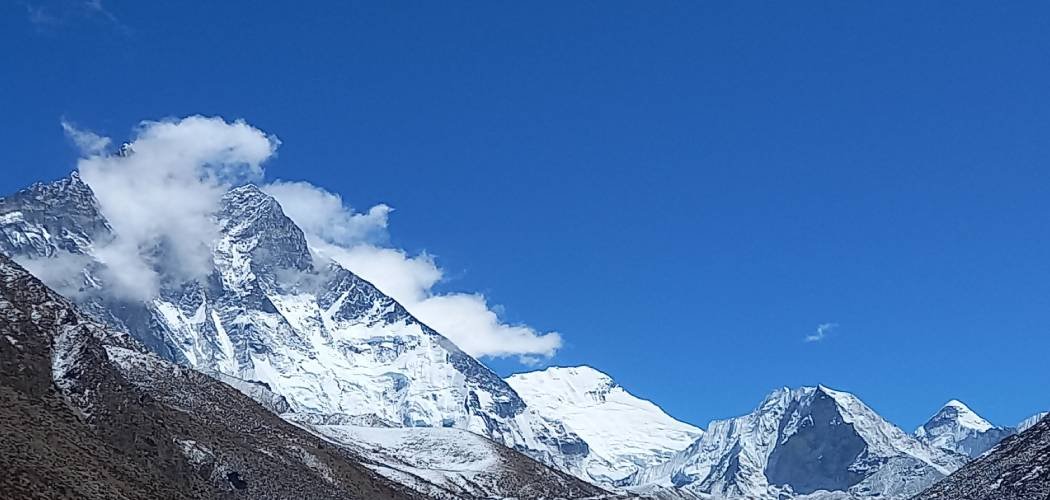
The trail continues with spectacular views of Ama Dablam, Lhotse, and Island Peak, offering a real sense of entering the alpine zone. As you move higher, the tree line fades, and you’ll walk through open yak pastures and stone-walled fields until you reach Dingboche, a picturesque village nestled in the Imja Valley beneath Ama Dablam.
Dingboche is known as the “Summer Valley” of the Khumbu and serves as an excellent spot for acclimatization, surrounded by towering peaks and peaceful scenery.
Overnight stay at a teahouse in Dingboche.
Today is a rest and acclimatization day in Dingboche to help your body adjust to the high altitude before heading further toward Everest Base Camp. Instead of complete rest, you’ll take a short hike to Nagarjun Hill (5,100m) or Chhukung Valley, both offering stunning panoramic views of Ama Dablam, Makalu, Lhotse, Island Peak, and Taboche.
This hike helps boost oxygen circulation and prepares you for the higher elevations ahead while rewarding you with some of the most impressive views in the Khumbu region.
After the hike, return to Dingboche for a relaxed afternoon — enjoy a warm meal, explore the village, and take in the magnificent mountain surroundings.
Overnight stay at a teahouse in Dingboche.
After breakfast, the trail gently ascends through alpine meadows and glacial moraines, offering spectacular views of Taboche, Cholatse, and Ama Dablam. You’ll trek toward Dughla (Thukla), where you can rest and have tea before a steep climb to the memorial ridge, built in honor of climbers who lost their lives on Everest.
From the top of the ridge, the trail becomes gentler, following the Khumbu Glacier with dramatic views of Pumori, Nuptse, and the Mahalangur Himal range. The air becomes thinner as you near Lobuche, a small settlement nestled beneath towering peaks.
Spend the evening acclimatizing, enjoying the mountain atmosphere, and preparing for the trek to Everest Base Camp the next day.
Overnight stay at a teahouse in Lobuche.
Today is one of the most exciting and rewarding days of the entire journey. The trail from Lobuche follows the rocky moraine of the Khumbu Glacier, gradually ascending toward Gorak Shep, the last settlement before Everest Base Camp. After a short rest and lunch at Gorak Shep, you’ll continue your trek to the legendary Everest Base Camp (5,360m) — the foot of the world’s highest mountain.
Standing at Base Camp, you’ll witness the Khumbu Icefall, colorful expedition tents, and panoramic views of Pumori, Nuptse, and Khumbutse. It’s a moment of pride and fulfillment for every trekker to reach this iconic point.
After capturing memories and soaking in the incredible scenery, you’ll return to Gorak Shep for an overnight stay.
Overnight at teahouse in Gorak Shep.
Begin your day before sunrise with an early climb to Kala Patthar (5,545m), one of the best viewpoints in the Everest region. The steep but rewarding ascent offers panoramic sunrise views of Mount Everest (8,848.86m), Lhotse, Nuptse, Pumori, and several other Himalayan giants glowing in golden hues.
Standing on Kala Patthar feels surreal — you are closer to the summit of Everest than anywhere else accessible without climbing gear. After spending some unforgettable moments and taking photos, descend back to Gorak Shep for breakfast.
You’ll then retrace your steps through the Khumbu Glacier trail, passing Lobuche and continuing down to the beautiful valley of Pheriche (4,210m). The air gets thicker, making the walk easier as you lose altitude.
Overnight at teahouse in Pheriche.
After breakfast, begin your descent from Pheriche, following the scenic trail along the Imja Khola River. The walk passes through Pangboche, home to one of the oldest monasteries in the Khumbu region, and offers stunning views of Ama Dablam, Thamserku, and Kangtega.
Continue downhill to Tengboche, where you can take a short break to visit the famous Tengboche Monastery, before descending further through lush forests filled with rhododendron and pine. Cross suspension bridges over the Dudh Koshi River and enjoy the changing landscape as you approach Namche Bazaar.
After several days in high altitude, reaching Namche feels refreshing — with warm lodges, bakeries, and the comfort of the lively Sherpa town.
Overnight at teahouse in Namche Bazaar.
Today marks the final trekking day of your Jiri to Everest Base Camp journey. After breakfast, descend along the familiar trail through dense pine forests and cross several suspension bridges over the Dudh Koshi River. Pass by charming Sherpa villages such as Monjo and Phakding, soaking in the last glimpses of the majestic Himalayas.
The trail gradually ascends on the final stretch to Lukla, where you’ll celebrate the completion of your incredible Himalayan adventure with your trekking crew. This is a perfect time to relax, reflect on your achievement, and enjoy your last evening in the mountains.
Overnight at teahouse in Lukla.
Early in the morning, take a scenic mountain flight from Lukla to Kathmandu, offering breathtaking aerial views of the Himalayan range one last time. Upon arrival at Tribhuvan International Airport, you’ll be transferred to your hotel.
Spend the rest of the day relaxing after your long trek — enjoy a hot shower, delicious meals, or a leisurely stroll around Thamel for souvenirs and local crafts.
Overnight stay at hotel in Kathmandu.
Today is a leisure day in Kathmandu, giving you time to unwind and reflect on your incredible trekking experience. You can simply relax at your hotel, enjoy a spa treatment, or explore more of the vibrant city.
If you wish, you can join optional sightseeing tours to visit UNESCO World Heritage Sites such as Pashupatinath Temple, Boudhanath Stupa, Swayambhunath (Monkey Temple), and Kathmandu Durbar Square.
In the evening, enjoy a farewell dinner with your trekking team or explore the city’s diverse food scene.
Overnight stay at hotel in Kathmandu.
After breakfast, our team will transfer you to Tribhuvan International Airport for your final departure. Take with you unforgettable memories of the Jiri to Everest Base Camp Trek, filled with breathtaking landscapes, rich Sherpa culture, and a sense of accomplishment.
We wish you a safe journey home and hope to see you again for another adventure in the Himalayas.
Farewell and Namaste!
Includes/Excludes
Cost Includes
- Airport picks up and transports by private Car/Jeep.
- Two night’s standard twin sharing Hotel in Kathmandu with breakfast.
- Three meals a day (Breakfast, lunch, and dinner) during the trek.
- Fresh fruit every evening after dinner.
- Kathamndu to Shivalaya by Public Bus.
- Trekking Lodge (Tea House) accommodation during the trek.
- All necessary paperwork including Sagarmatha National Park & Gaurishankar National Park.
- Entry Permit & Khumbu Pasang Lhamu Rural Municipality fees.
- Lukla-Kathmandu (Lukla- Ramechhap) flight with private airport transfer and domestic airport tax.
- A highly experienced, helpful, knowledgeable, friendly, English speaking well trained.
- Government license holder guide with all his salary, food, drinks, accommodation, transport and insurance.
- Strong, helpful Sherpa porters with proper safety equipment and walking equipment, his salary.
- food, accommodation, and insurance (one porter for two people).
- Comprehensive medical supplies (first aid kit will be available).
- Arrangement of emergency helicopter service (paid by your Travel Insurance Company).
- Use of sleeping bag, down jacket, duffel bag and walking poles (if you don’t have your own, to be returned after trip completed).
- Government taxes and official expenses.
- Trip achievement certificate after successful trip completion.
- Oxygen meter to check your pulse and oxygen saturation and heart rate twice daily.
- Very useful to check Altitude Mountain Sickness(AMS) symptoms) which will ensure your health during the trek.
- Assistant guide for groups of 8 or more people.
Cost Excludes
- Meals whilst you are in Kathmandu - lunch, and dinner.
- Nepal entry visa fee (easy to obtain the visa on arrival at Tribhuvan International Airport.
- Kathmandu). $30 USD for 15-day, $50 USD for 30 Days, and $125 USD for 90 Days visa.
- Personal travel and medical insurance.
- International airfare.
- Your personal expenses.
- All the alcoholic and nonalcoholic, soup, tea, coffee, hot chocolate, cocoa, mineral water.
- Extra food, cold and hot drinks on trek ( i.e. those you choose to purchase along the way and during evenings in the tea houses)
- All desserts & sweet things like chocolate, cake, pie, pudding.
- Hot shower and battery charging at the tea houses.
- Tips for the guide, porter, and driver (tipping is expected)
- Excess baggage of more than 10 kg for Lukla flight.
FAQs
The Jiri to Everest Base Camp Trek is the classic route to Everest, first used by Sir Edmund Hillary and Tenzing Norgay in 1953. It offers a cultural and scenic journey through traditional Sherpa villages, lush forests, and Himalayan valleys before reaching the Everest Base Camp (5,364m).
The trek typically takes 20–22 days, including travel to Jiri, acclimatization days, and the return journey. The duration can vary depending on fitness level, pace, and chosen itinerary.
The best seasons for trekking are spring (March–May) and autumn (September–November) when the weather is clear, the temperature is moderate, and mountain views are at their finest.
While prior trekking experience helps, beginners with good physical fitness can complete the trek. The route is physically demanding due to long ascents and descents but is manageable with proper preparation and acclimatization.
Trekkers need the Sagarmatha National Park Permit, Khumbu Pasang Lhamu Rural Municipality Permit, and TIMS Card (Trekkers’ Information Management System). Your trekking agency usually arranges all necessary permits before departure.