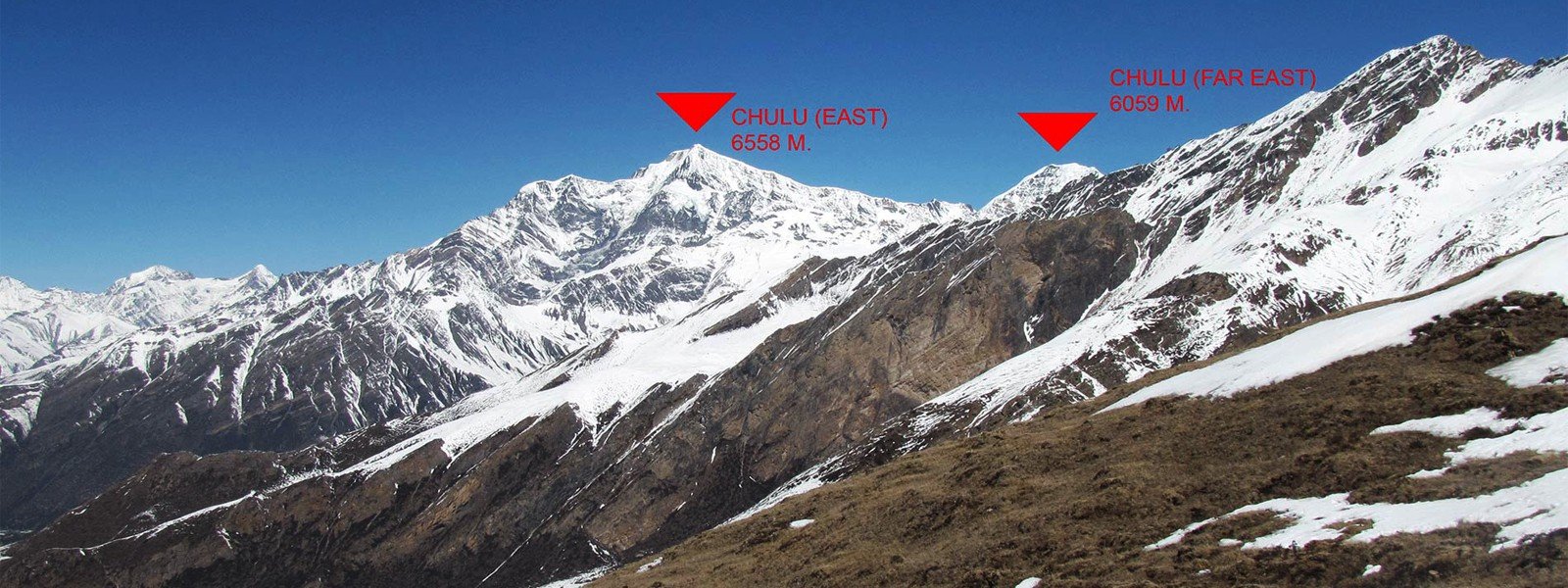
Chulu Far East Peak Climbing (6,059m) in the Annapurna region is a lifetime opportunity for those seeking a true Himalayan mountaineering experience. This adventurous climb rewards you with breathtaking panoramic views of the world’s highest peaks, including Mt. Dhaulagiri (8,167m), Mt. Manaslu (8,163m), Mt. Annapurna I (8,091m), and several other magnificent snow-covered mountains.
The journey begins with a scenic trek through the beautiful Manang Valley—one of the highest valleys in Asia—offering a blend of natural beauty and rich Gurung culture. The initial days feature pleasant walking trails through sub-tropical pine and rhododendron forests, along with chances to encounter diverse Himalayan wildlife.
Although Chulu Far East is considered one of the challenging peaks in the Annapurna region, prior climbing experience is not mandatory. However, good physical fitness and mental preparation are essential for a safe and successful ascent. The climb demands proper acclimatization, teamwork, and favorable weather conditions.
Reaching the summit of Chulu Far East Peak offers an unforgettable experience with close-up views of Annapurna, Dhaulagiri, and Machapuchare (Fishtail). This expedition is perfect for adventurers who dream of standing high in the Himalayas and embracing the pure thrill of Nepal’s alpine beauty.
Trip Info
-
Hotel/Tea houses.
-
Autumn - Spring
-
6059m
-
Fly/Car/Jeep/ Bus
-
5/6 hours
Overview
Although it may not share the same fame as its towering Himalayan neighbors, Chulu East Peak draws adventurers who seek to uncover the untouched beauty of Nepal’s highlands. Beyond being a physical challenge, this expedition offers a gateway into the heart of the Annapurna region—where awe-inspiring natural landscapes blend seamlessly with the area’s deep-rooted cultural heritage.
Chulu East Peak Climbing is more than just reaching a summit; it’s about experiencing the spirit of adventure that lies within Nepal’s majestic mountains. As you ascend, the crisp mountain air and ever-changing panoramas fill each step with excitement and wonder. The journey reveals sweeping views of Annapurna, Dhaulagiri, Manaslu, and other Himalayan giants, creating moments that stay with you for a lifetime.
In this expedition, we explore what makes Chulu East Peak Climbing one of Nepal’s most rewarding experiences—from understanding the detailed route and essential preparations to focusing on safety measures and acclimatization. Just as important is the respect for nature and the local Gurung culture that defines this region. Every moment spent here becomes a story of endurance, respect, and connection with the mountains.
Trip Highlights
- Scenic Drive: Experience a picturesque journey to the Annapurna region, where you’ll witness rural life and marvel at snow-capped peaks along the way.
- Trekking Delights: As you trek through lush forests and arid landscapes, you’ll have the opportunity to take in the stunning views of Lamjung Himal and the Annapurna peaks.
- Cultural Immersion: Immerse yourself in the traditional architecture and spiritual sites of Ngawal village, gaining insight into local culture.
- Acclimatization Hike: Prepare for altitude with a gentle hike, allowing you to adapt while engaging with the local community and culture.
- Summit Triumph: Conquer Chulu East Peak and be rewarded with breathtaking vistas of the Himalayas.
- High Camp Experience: Spend a night at High Camp, surrounded by the majestic beauty of the Himalayas.
- Base Camp Retreat: Rest and rejuvenate at Chulu East Base Camp, surrounded by the awe-inspiring mountain landscape.
Itinerary
Upon your arrival at Tribhuvan International Airport in Kathmandu, our representative will warmly welcome you and assist with your transfer to the hotel. After checking in, you can take some time to relax and recover from your journey. Later in the evening, you’ll meet your guide and the climbing team for a short briefing about the Chulu East Peak Climbing itinerary, necessary equipment, and safety guidelines.
You can explore the vibrant streets of Thamel, a popular tourist hub filled with shops, restaurants, and cultural charm. Enjoy your first night in Nepal’s capital city, preparing for the incredible adventure ahead in the Himalayas.
Accommodation: Hotel in Kathmandu
Meal: Dinner (Welcome Dinner)
After breakfast, your journey begins with a scenic drive from Kathmandu to Besisahar, the gateway to the Annapurna region. The route follows the Prithvi Highway along the Trishuli and Marsyangdi Rivers, offering stunning views of terraced fields, green hills, and rural villages.
From Besisahar, the road turns more rugged as you continue by jeep toward Chamje, passing through beautiful settlements like Syange and Jagat. Along the way, you’ll get your first glimpses of cascading waterfalls and distant snow-capped peaks. The journey, though long, is filled with breathtaking landscapes and a sense of adventure that sets the tone for the days ahead.
Upon reaching Chamje, check into a teahouse and rest for the evening.
Accommodation: Teahouse in Chamje
Meals: Breakfast, Lunch, Dinner
Today’s trek begins after breakfast as you follow the Marsyangdi River through a series of uphill and downhill trails surrounded by lush green forests and rocky paths. Crossing several suspension bridges, you’ll pass by charming villages like Tal, where you officially enter the Manang District.
The landscape gradually changes, revealing a mix of subtropical vegetation and alpine terrain. Along the way, you’ll witness traditional stone houses and terraced farmlands that reflect the local Himalayan lifestyle. After a steady climb through scenic trails, you’ll reach Dharapani, a picturesque village nestled in the heart of the valley.
Dharapani offers a warm welcome with cozy teahouses and a peaceful mountain atmosphere—an ideal place to rest after a fulfilling day’s walk.
Accommodation: Teahouse in Dharapani
Meals: Breakfast, Lunch, Dinner
After a hearty breakfast in Dharapani, the trail gradually ascends through dense pine and fir forests toward Chame, the administrative center of the Manang District. You’ll trek along the Marsyangdi River, passing through beautiful villages such as Bagarchhap and Timang, which offer stunning views of Lamjung Himal and Manaslu.
The air becomes cooler as you gain altitude, and the landscape begins to reveal classic Himalayan scenery—towering cliffs, waterfalls, and snow-capped peaks in every direction. Along the way, you’ll also notice prayer wheels and mani walls reflecting the strong Buddhist culture of the region.
Upon reaching Chame, enjoy a relaxing evening in this charming mountain town known for its hot springs and spectacular views of Annapurna II (7,937m).
Accommodation: Teahouse in Chame
Meals: Breakfast, Lunch, Dinner
Leaving Chame after breakfast, today’s trek offers a gradual yet scenic journey toward Pisang. The trail passes through beautiful pine and rhododendron forests, following the Marsyangdi River with stunning views of Lamjung Himal, Annapurna II, and Annapurna IV along the way.
As you continue, the valley begins to open up wider, revealing breathtaking views of rocky cliffs and snow-covered peaks. You’ll pass through small villages like Bhratang and Dhukur Pokhari, where you can rest and enjoy the serene surroundings. The trail then gently ascends toward Pisang, located in a wide valley with magnificent views of Pisanga Peak and the Annapurna range.
Once you arrive in Upper Pisang, you’ll find traditional stone houses, monasteries, and friendly locals who reflect the region’s rich Tibetan-influenced culture. Spend the evening relaxing and enjoying the mountain scenery.
Accommodation: Teahouse in Pisang
Meals: Breakfast, Lunch, Dinner
Today’s trek follows the upper route from Pisang to Ngawal, offering some of the most scenic and rewarding views of the entire Annapurna region. The trail ascends gradually through alpine forests and high ridges, where the panoramic vistas of Annapurna II, Annapurna III, Annapurna IV, Gangapurna, and Tilicho Peak are simply breathtaking.
You’ll pass through the picturesque Ghyaru village (3,670m), a traditional settlement known for its stone houses, ancient monasteries, and panoramic mountain views. From here, the path continues with a series of gentle ascents and descents until you reach Ngawal, one of the most beautiful and culturally rich villages in the Manang Valley.
Ngawal sits on a high ridge and offers stunning views of the Annapurna range and the Marsyangdi Valley below. In the evening, explore the village, visit the local monastery, and experience the peaceful lifestyle of the Himalayan people.
Accommodation: Teahouse in Ngawal
Meals: Breakfast, Lunch, Dinner
Today is set aside for acclimatization and rest to help your body adjust to the higher altitude before moving further up the trail. Ngawal, perched high above the Marsyangdi Valley, offers an ideal setting for a relaxing yet rewarding acclimatization day.
You can spend the morning exploring the traditional Buddhist monasteries, ancient chortens, and prayer walls that showcase the region’s deep spiritual culture. For those feeling energetic, a short hike to nearby viewpoints rewards you with incredible panoramas of Annapurna II, Annapurna III, Gangapurna, and Tilicho Peak—a perfect opportunity for photography and quiet reflection.
In the afternoon, enjoy some rest at your teahouse, hydrate well, and check your gear for the upcoming ascent toward the Chulu East Base Camp. The peaceful atmosphere of Ngawal, combined with stunning views and local hospitality, makes this an enjoyable and necessary stop for proper acclimatization.
Accommodation: Teahouse in Ngawal
Meals: Breakfast, Lunch, Dinner
After breakfast, you leave the charming village of Ngawal and continue trekking toward Yak Kharka, gaining altitude gradually. The trail ascends through open alpine landscapes with sparse vegetation, passing by pasturelands where yaks and mountain goats graze peacefully. The scenery becomes increasingly dramatic as you move higher, with the snow-capped peaks of Annapurna III, Gangapurna, and Tilicho Peak dominating the skyline.
Along the way, you’ll pass through small settlements like Gunsang, where you can stop for tea and enjoy the crisp mountain air. The trail remains moderate, with gentle ups and downs, allowing time to enjoy the beauty of the upper Manang region.
Upon arrival at Yak Kharka, you’ll be surrounded by a peaceful Himalayan environment with panoramic mountain views. The area serves as a grazing ground for yaks and an important acclimatization stop before heading toward the Chulu East Base Camp. Spend the evening resting and preparing for the higher altitude trek ahead.
Accommodation: Teahouse in Yak Kharka
Meals: Breakfast, Lunch, Dinner
Today’s trek takes you from Yak Kharka to Chulu East Base Camp, a major highlight of the expedition. The trail ascends steadily through rugged alpine terrain, offering increasingly close-up views of Annapurna II, Gangapurna, Chulu East, and Chulu Far East Peaks. The vegetation becomes sparse as you move higher, with rocky slopes and glacial landscapes replacing the green pastures of the lower valleys.
As you gain altitude, the air becomes thinner, so it’s important to walk at a steady pace and stay hydrated. The final stretch to the base camp involves a gradual climb over rocky moraines and ridges, eventually reaching the Chulu East Base Camp (5,140m) — your resting spot before the summit attempt.
Upon arrival, your climbing crew will set up the camp and prepare warm meals. Spend the afternoon exploring the surrounding area, checking climbing equipment, and enjoying the spectacular Himalayan scenery.
Accommodation: Tent Camp at Chulu East Base Camp
Meals: Breakfast, Lunch, Dinner
After an early breakfast, begin your ascent from Base Camp to High Camp, gaining about 500 meters in elevation. The trail climbs steadily over rocky ridges and icy slopes, offering jaw-dropping views of Annapurna II, III, IV, Gangapurna, and Chulu Far East along the way.
This section requires careful pacing and attention due to the higher altitude and thinner air. Your guide will ensure a safe climb while helping you adjust to the conditions. As you ascend, you’ll feel the adventure intensify—the landscape becomes more rugged and purely alpine, surrounded by glistening snow and ice.
Upon reaching High Camp (5,600m), your team will set up tents and prepare for the summit push. Spend the afternoon resting, hydrating, and checking your climbing gear. Your guide will also conduct a short briefing on summit day procedures, safety measures, and climbing techniques to ensure a successful ascent the following morning.
Accommodation: Tent Camp at High Camp
Meals: Breakfast, Lunch, Dinner
Today is the most important and thrilling day of your entire expedition—the summit day of Chulu East Peak (6,059m). You’ll start early, usually around 2:00–3:00 a.m., to take advantage of stable weather and firm snow conditions. Equipped with climbing gear such as crampons, ropes, and ice axes, you’ll ascend gradually over steep snow slopes and icy ridges under the guidance of your experienced climbing leader.
As the sun rises, breathtaking views unfold all around you. From the summit, you’ll witness a spectacular 360° panorama of the Annapurna Massif, including Annapurna II, III, IV, Dhaulagiri, Manaslu, Gangapurna, Tilicho Peak, and Chulu Far East—a truly unforgettable sight that rewards every ounce of effort.
After celebrating your successful climb and taking photos, you’ll carefully descend back to Base Camp and continue further down to Ngawal for a well-deserved rest. The descent can be long and tiring, but the sense of accomplishment and the memories of standing atop a Himalayan summit make it all worthwhile.
Accommodation: Teahouse in Ngawal
Meals: Breakfast, Lunch, Dinner
After a well-earned rest in Ngawal, today’s trek takes you on a pleasant and scenic descent toward Manang, one of the most beautiful and culturally rich villages in the Annapurna region. The trail begins with a gentle downhill walk through alpine meadows, passing by ancient chortens, mani walls, and prayer flags fluttering in the wind.
As you continue, you’ll enjoy magnificent views of Annapurna III, Gangapurna, Tilicho Peak, and the Marsyangdi Valley. The landscape gradually changes, becoming greener and more vibrant as you approach the valley floor. Along the way, you’ll pass through small villages and meet friendly locals, getting a closer look at the unique Tibetan-influenced lifestyle of the Manang people.
Upon arrival in Manang (3,341m), you can explore the village, visit monasteries, or relax by the Gangapurna Lake. The evening offers a comfortable stay in a cozy teahouse surrounded by breathtaking Himalayan scenery.
Accommodation: Teahouse in Manang
Meals: Breakfast, Lunch, Dinner
After breakfast, you begin your gradual ascent from Manang toward Yak Kharka, following the upper valley of the Marsyangdi River. The trail climbs gently through juniper forests and alpine meadows, offering stunning views of Annapurna II, Annapurna III, Gangapurna, and Tilicho Peak along the way.
You’ll pass through small settlements like Tengi and Gunsang, where you can stop for a short break and enjoy the serene mountain atmosphere. As the altitude increases, the air becomes thinner, so it’s important to walk slowly and stay hydrated. The terrain becomes more rugged, with yaks and blue sheep often seen grazing on the high pastures—hence the name Yak Kharka (“Yak Pasture”).
Upon reaching Yak Kharka (4,200m), you can relax and enjoy the peaceful surroundings. This stop provides a perfect opportunity for acclimatization before crossing the high Thorong La Pass in the coming days.
Accommodation: Teahouse in Yak Kharka
Meals: Breakfast, Lunch, Dinner
Today’s trek is relatively short but important for proper acclimatization before crossing the Thorong La Pass. After breakfast, you’ll leave Yak Kharka and follow a gradual uphill trail along the Jarang Khola (stream). The path offers breathtaking views of Gagangpurna, Gundang, and Thorong Peak, while the rugged alpine terrain becomes more prominent as you approach higher altitudes.
The trail passes through sparse vegetation and rocky landscapes, occasionally crossing suspension bridges. You’ll ascend slowly to avoid altitude-related issues, taking regular breaks along the way. After about three to four hours of steady walking, you’ll reach Thorong Phedi (4,560m)—the base camp for the Thorong La Pass crossing.
Upon arrival, you can relax, enjoy a warm meal, and prepare for the challenging day ahead. Some trekkers may choose to hike a little higher to High Camp (4,880m) for better acclimatization, but most stay at Phedi for a good night’s rest before the early morning start.
Accommodation: Teahouse in Thorong Phedi
Meals: Breakfast, Lunch, Dinner
Today marks one of the most challenging and rewarding days of the entire trek. You’ll begin your journey early in the morning—usually around 3:00 a.m.—to ensure safe passage across the Thorong La Pass (5,416m) before the strong midday winds begin. The climb is steep and demanding, but slow and steady pacing will help you reach the top successfully.
As you ascend through icy trails and rocky ridges, the breathtaking scenery of Annapurna, Dhaulagiri, Thorong Peak, and Yakawa Kang surrounds you, offering unforgettable Himalayan vistas. Upon reaching the Thorong La Pass, the highest point of the trek, you’ll be greeted by colorful prayer flags and a sense of pure accomplishment. Take time to enjoy the incredible panoramic views and capture some memorable photos.
From the pass, the trail descends steeply toward Muktinath, one of the most sacred pilgrimage sites for both Hindus and Buddhists. The descent can be tough on the knees but offers magnificent views of the Muktinath Valley and the arid landscape of Lower Mustang.
Upon arrival, you can visit the Muktinath Temple, known for its 108 water spouts and eternal flame, symbolizing spiritual purification. Rest and relax after this long yet deeply fulfilling day.
Accommodation: Teahouse in Muktinath
Meals: Breakfast, Lunch, Dinner
After breakfast, you begin your final trekking day, descending from the sacred town of Muktinath toward Jomsom, the headquarters of the Mustang District. The trail offers a beautiful transition from the high alpine zone to the dry, windswept landscapes of the Kali Gandaki Valley, famous for its ancient fossils and dramatic rock formations.
You’ll pass through the picturesque villages of Jharkot and Kagbeni, where you can explore ancient monasteries and experience the strong Tibetan-influenced culture of the region. The trail continues along the Kali Gandaki River, offering stunning views of Nilgiri and Dhaulagiri peaks.
As you approach Jomsom, the landscape becomes more arid and the wind stronger—typical characteristics of the Mustang region. Upon arrival, you can relax at your teahouse, celebrate the successful completion of your Chulu East Peak Climbing adventure, and enjoy the cozy mountain atmosphere of this charming town.
Accommodation: Teahouse in Jomsom
Meals: Breakfast, Lunch, Dinner
Early in the morning, you’ll take a scenic flight from Jomsom to Pokhara, a short yet unforgettable journey that offers spectacular aerial views of the Annapurna and Dhaulagiri ranges, as well as the winding Kali Gandaki Gorge — the world’s deepest. The flight takes about 20–25 minutes, providing one last glimpse of the majestic Himalayas before you descend to the lush, green valley of Pokhara.
Upon arrival, you’ll be transferred to your hotel, where you can relax and enjoy a well-deserved shower and comfortable rest. Later, you can explore Lakeside Pokhara, visit Phewa Lake, or simply unwind in one of the many lakeside cafés and restaurants while reflecting on your successful Chulu East Peak Climbing adventure.
Accommodation: Hotel in Pokhara
Meals: Breakfast
After breakfast, you’ll begin your drive back to Kathmandu, following the scenic Prithvi Highway along the Trishuli River. The journey offers picturesque views of terraced hillsides, small towns, and the rural lifestyle of Nepal’s countryside. You can stop along the way for lunch and short breaks to stretch and enjoy the refreshing landscapes.
As you approach Kathmandu, the bustling city life gradually returns, marking the completion of your unforgettable Himalayan adventure. Upon arrival, you’ll be transferred to your hotel for check-in. The evening is free for rest, last-minute shopping, or exploring the vibrant Thamel area for souvenirs and local delicacies.
Later, you can enjoy a farewell dinner with your guide and team to celebrate the successful completion of your Chulu East Peak Climbing Expedition.
Accommodation: Hotel in Kathmandu
Meals: Breakfast, Farewell Dinner
Your incredible Chulu East Peak Climbing adventure in the Annapurna region comes to an end today. After breakfast, or depending on your flight schedule, our representative will transfer you to Tribhuvan International Airport for your international departure.
Take with you unforgettable memories of the Himalayas—the breathtaking mountain views, the warmth of Nepali hospitality, and the satisfaction of conquering one of Nepal’s most scenic trekking and climbing routes.
If you wish to explore more of Nepal or plan another expedition in the future, our team will be happy to assist you again.
Meals: Breakfast
Includes/Excludes
Cost Includes
- Airport transfers and guided sightseeing in Kathmandu Valley with entrance fees.
- The Hotel in Kathmandu, teahouses for trekking, and tented accommodation during Chulu East Peak Climbing.
- Three-times meals during trek and Chulu East Peak Climbing.
- All necessary staff with experienced English-speaking climbing guide, cook, assistant climbing leader (5trekkers 1 assistant guide), and Sherpa porters.
- Domestic flight from Jomsom to Pokhara.
- All necessary paperwork like trekking permits and Chulu East Peak Climbing permit.
- Mountaineering camping and Chulu East Peak Climbing equipment high-quality equipment like North Face or Mountain Hardwar tents, mattresses, and kitchen equipment.
- Travel and rescue arrangements provide.
- Farewell Dinner.
- Exclusive Medical Kit Bag.
- All government and local taxes.
Cost Excludes
- Nepal Visa fee and International airfare.
- Excess baggage charges.
- Accommodation and meals in Kathmandu because of early arrival, late departure, and early return from Chulu East Peak Climbing.
- Altitude chamber or oxygen.
- Travel and rescue insurance.
- Personal climbing equipment.
- Personal climbing guide on your request.
- Personal expenses like phone calls, laundry, bar bills, mineral/boiled water, shower, etc
- Tips for trekking and climbing crew member.
FAQs
Chulu East Peak (6,059m) is considered a moderately challenging trekking peak in the Annapurna region. The climb involves high-altitude trekking, glacier walking, and some technical sections near the summit. Prior climbing experience is helpful but not mandatory if you are physically fit, mentally prepared, and guided by professional climbers. Proper acclimatization and training are key to success.
The best seasons to climb Chulu East Peak are spring (March to May) and autumn (September to November). During these months, the weather is stable, skies are clear, and the trails are in excellent condition—providing the best visibility of Annapurna, Dhaulagiri, and Manaslu ranges.
While previous mountaineering experience is not strictly required, climbers should have good physical fitness and basic knowledge of trekking at high altitudes. Your guide will provide necessary training on using climbing gear such as crampons, ice axes, and ropes before the summit attempt.
To climb Chulu East Peak, you need the following official permits:
- Nepal Mountaineering Association (NMA) Climbing Permit
- Annapurna Conservation Area Permit (ACAP)
- Trekkers’ Information Management System (TIMS) Card
All permits are arranged by your trekking or expedition company before the climb begins.
During the trek, accommodation is provided in comfortable teahouses offering local and continental meals. Once you reach the Base Camp and High Camp, you’ll stay in tented camps with freshly prepared hot meals by the expedition cook. All meals are designed to keep you energized and healthy throughout the journey.